Koke: From Atlético’s Academy to Club Captain
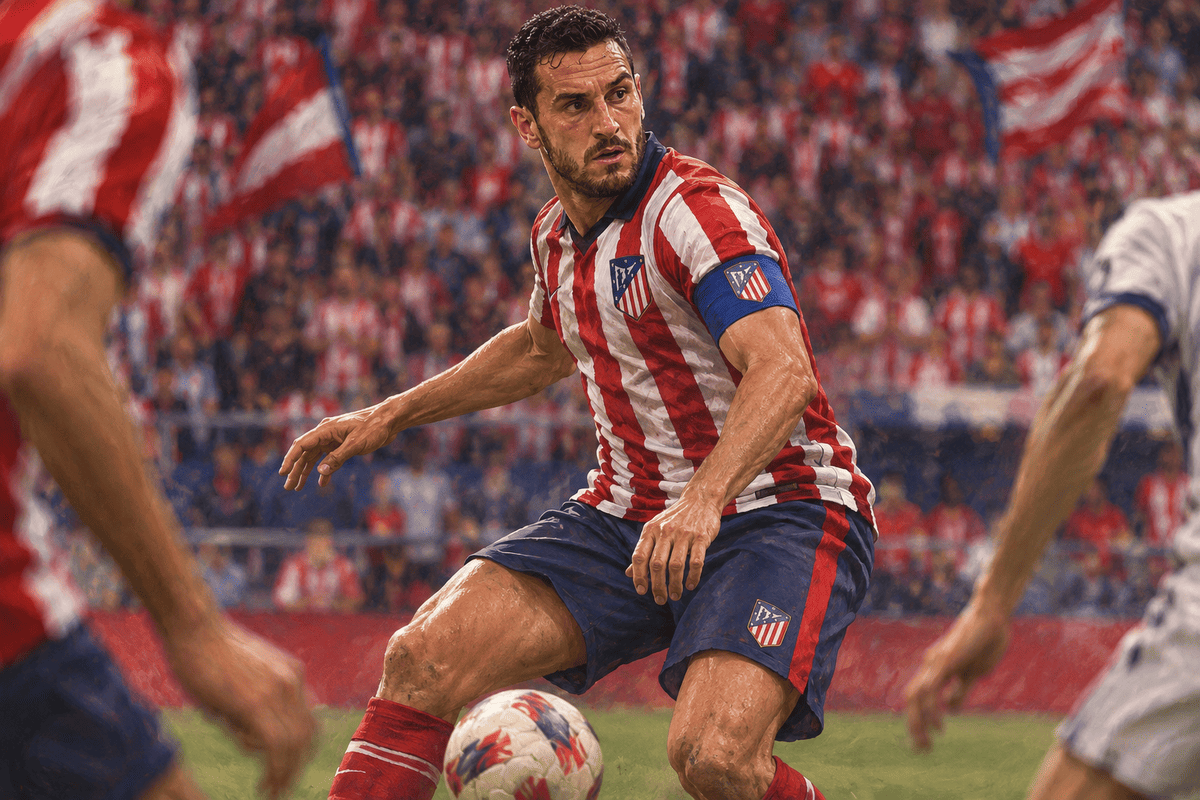
Watch Koke when an Atlético centre-back has the ball and the obvious passing lane is blocked. He will often move a few steps towards the ball, check over his shoulder and give the defender an angle. Sometimes he uses the next touch simply to send the ball towards the opposite side. That quiet sequence explains why coaches keep looking for him when an opponent is making it hard for Atlético to get out.
A debut that makes sense in hindsight
The 2009 debut against Barcelona puts a useful date on the story. Look at the Atlético team from that period and then at the one that won the league in 2014. The young Koke had to earn a position while the team around him was changing shape, expectations and personnel. By the title season his job involved a great deal more than acting as the academy graduate in the starting lineup. He closed passing lanes, protected his full-back, took set pieces and found passes towards the forwards when Atlético recovered the ball. The combination made it much easier for a coach to trust him through a match with only brief periods of possession.
What a wide midfielder could see
A flank starting position suits a player who can see both the touchline and the central midfielders. In an Atlético 4–4–2, the distance to the player behind him mattered as much as his distance to the strikers. If the full-back advanced, Koke could move into the space inside him to create a passing triangle. If the other side had the ball, he could narrow his position and make the route into the middle harder. Watch how often this work takes place a few metres from the action the camera is following. The next pass or tackle makes the movement visible, but the preparation happened on the previous touch.
From the flank to the middle
Jorge Resurrección, better known as Koke, came through the academy and made his senior debut against Barcelona in 2009. The role many fans remember from the 2013–14 title season started in a wide midfield position, with room to move inside and combine. In later sides he often received the ball much deeper. The task changed with the position. A player arriving near the box can take a chance with a pass. The player stationed in front of his centre-backs has to know what the team will look like if that pass goes astray.
How the job moved deeper
Think of a pass arriving from one of the centre-backs with an opponent already moving to press. A deeper Koke has to choose whether to meet the ball, let it run across his body or return it first time. Receiving on the half-turn might open up a winger. Playing it back could draw the press forward and give a teammate room on the far side. Each choice changes where Atlético's defensive cover will be if the next pass breaks down. This is one reason he can look busier in a difficult match with the ball than in a comfortable victory. Every exit asks him to make a fresh judgment about risk.
An armband passed through changing teams
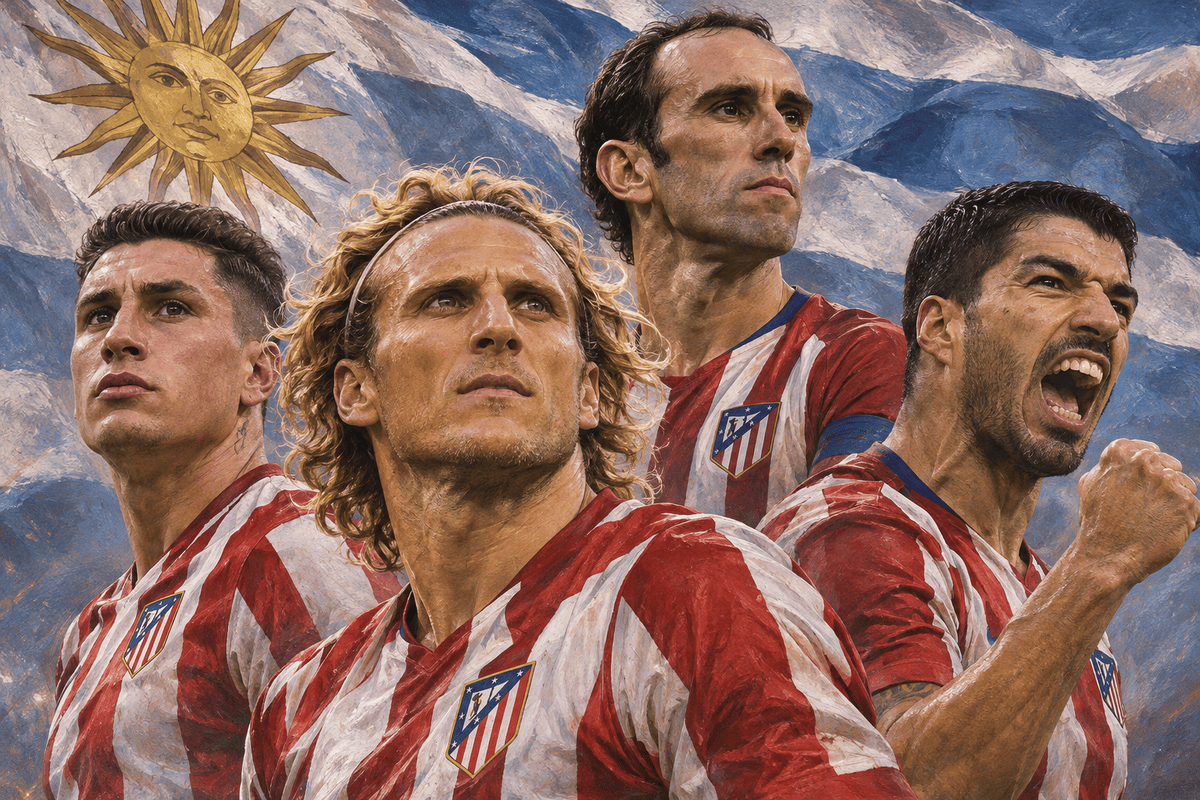
Gabi and Diego Godín belonged to earlier versions of the dressing room in which Koke grew into a senior player. Becoming captain put him in teams with newer teammates and, at times, different shapes from the old 4–4–2. A useful scene to watch comes after Atlético lose the ball. Notice whether he steps towards it or motions for others to recover their positions first. The decision can tell you more about how a captain organizes a team than a close-up at the coin toss. There is also continuity in the details: finding an outlet after a tackle, giving the nearest teammate an easy pass and deciding when a promising attack needs another touch to settle.
What to learn from his set pieces
Koke's deliveries are also a way to understand his passing. A corner gives him a stationary ball but a moving set of targets. A pass from midfield offers movement on both sides of the equation. In either situation the delivery is most useful when it reaches the space the receiver is about to occupy. Try comparing a corner aimed into traffic with a low ball slipped into the channel for a forward. The techniques look different. The shared skill is in anticipating where the receiver will be when the ball arrives. Seen alongside the recovery work on the flank and the decisions in central midfield, set pieces add a third way to appreciate him. There is a reason that recordings of complete matches are more revealing than a list of his most memorable shots.
Watching a Koke match away from the ball
Pick a match from the Calderón years and another in which Koke starts in front of three central defenders or alongside a second pivot. For a few minutes, follow him between possessions. Where does he stand when a teammate receives wide? How early does he look over his shoulder? Which opponent does he leave for someone else? Comparing the same questions across two matches is a better way to understand his record than looking at goals alone. The appearances kept accumulating because several different Atlético sides could use the player responsible for making their next action easier.
The record and the armband
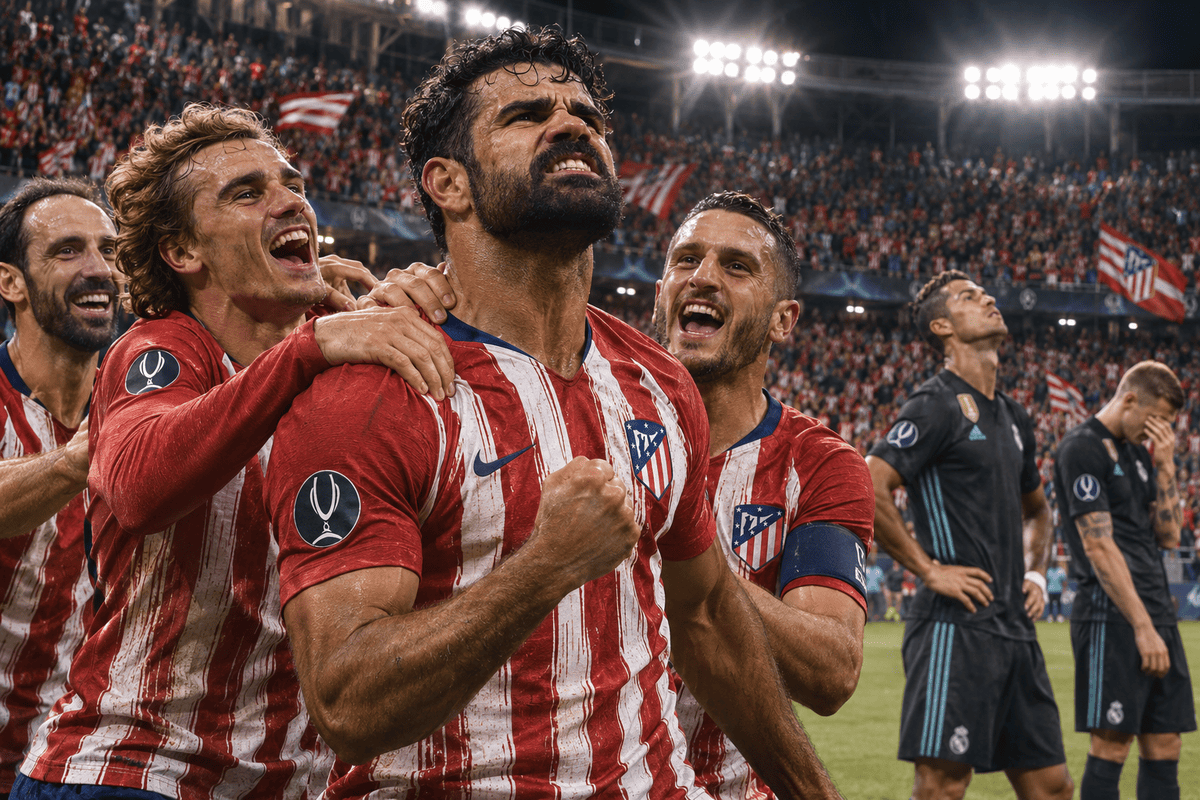
In a Madrid derby in September 2022, Koke drew level with Adelardo on 553 official appearances. He went on to break the record. His career connects a Calderón midfield that squeezed opponents with a modern Atlético asked to build through pressure and spend longer spells on the ball. For the next academy midfielder watching from the stands, it also offers something concrete: a path from learning the club’s game to being the player who sets its tempo.
Sources and further reading · Atlético de Madrid · Koke / Adelardo

Comments
No comments yet. Be the first to say what you think.