Adelardo Rodríguez: The Atlético Legend Every New Fan Should Know
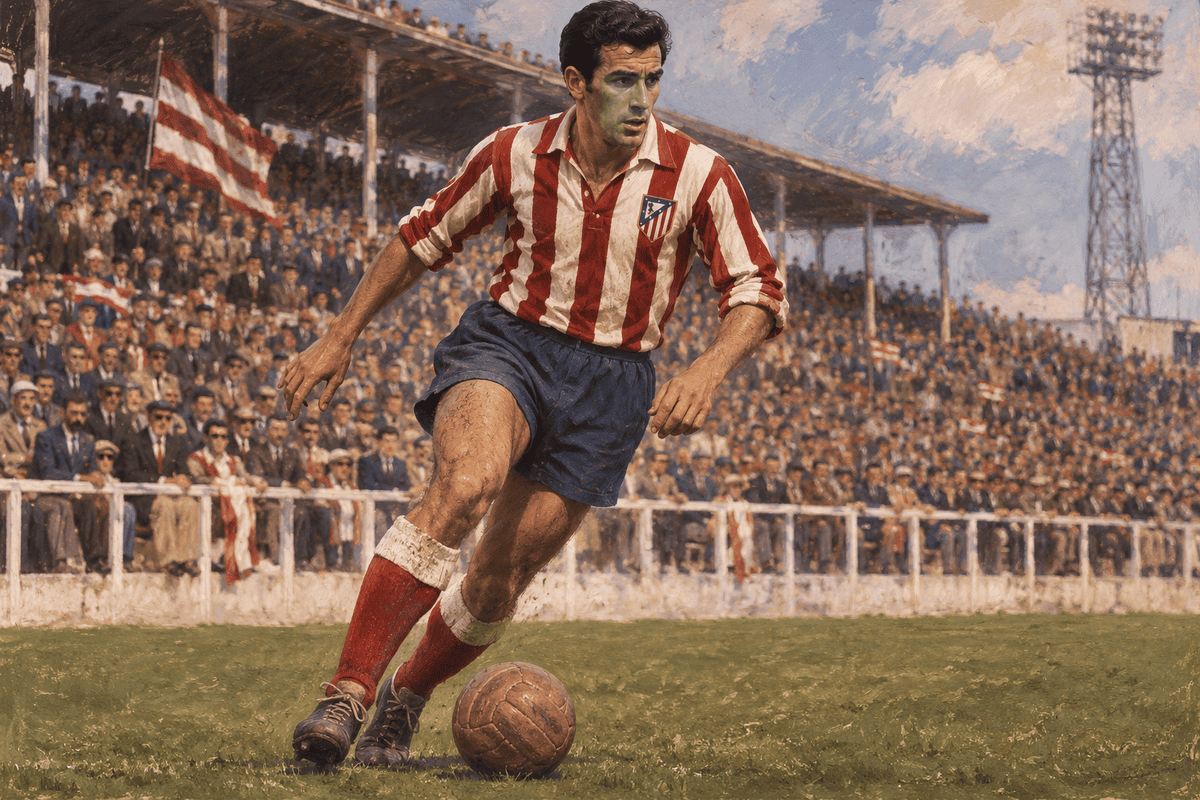
When Koke reached 553 official appearances in 2022, he brought a name back into the match reports: Adelardo Rodríguez. Adelardo had set the mark across 17 seasons, from 1959 to 1976. A supporter seeing his name for the first time could easily take it for a line in a record book. Look at the competitions he played in and it becomes a way to follow much of Atlético’s history in that period.
From Badajoz to a new decade in Madrid
Adelardo joined the Atlético first team in 1959. The dates on his club profile, 1959 to 1976, cover several very different versions of Spanish and European football. Domestic seasons still set most of the rhythm, while European ties could take teams to unfamiliar venues and force them to solve a contest over more than one evening. For a midfielder, lasting through that span meant playing with successive groups of forwards and defenders, some of whom were established when he arrived and some of whom began their senior careers years later. The short version of the story is 553 matches. The longer version is how many times the pieces around him changed.
Stuttgart and the final that had to be played again
The 1962 Cup Winners' Cup final against Fiorentina took two games to settle. The first encounter finished level in Glasgow and the replay took place in Stuttgart. Atlético won the replay 3–0. Miguel Jones, Jorge Mendonça and Joaquín Peiró scored, with Adelardo in the Atlético midfield. Try to see the positions of the other Atlético players as the move unfolds. Even incomplete film gives a glimpse of how the midfield supported the forwards when Atlético got into the area. A career remembered for its sheer number of appearances also belongs in the record of the club's first European trophy.
Seventeen seasons in midfield
Adelardo came from Badajoz and joined an Atlético team that emerged as a cup and league contender. In 1962, he played in the Cup Winners’ Cup final replay as Atlético beat Fiorentina in Stuttgart. That is a good place to start with the archive. It shows the side he played in on a night when the club won its first major European trophy. He was still there when a later Atlético generation reached the 1974 European Cup final, and he played in the Intercontinental Cup triumph against Independiente that followed.
The road from Brussels to the Intercontinental Cup
Atlético came close to winning the 1974 European Cup against Bayern Munich in Brussels. The first match ended level after extra time and Bayern won the replay. The next part of the story has a twist that can surprise a supporter reading the honours list. Bayern did not play the Intercontinental Cup against Independiente, and Atlético took its place. The Spanish side lost the away leg and turned the tie around in Madrid, with the deciding match played in 1975. Read the two episodes together to make sense of the trophy. The missed chance in Brussels explains why appearing in the Intercontinental Cup at all was an unusual opportunity.
How to read the appearance record
The mark of 553 covers official matches, a detail worth keeping when you compare figures from different sources. Some older accounts include friendlies or use a different definition of first-team games. The simple comparison is the one the club made in 2022, when Koke drew level. One player came from the club's youth system and the other arrived from Badajoz. Both stayed through enough changes in the team for followers to associate them with more than one era. That is what makes the comparison a useful invitation to the archive. It gives a modern supporter a familiar face through which to reach a much older career.
The coaches and teammates around him
The lineups of the early 1960s offer another way into this story. In Stuttgart the team contained names such as Enrique Collar and Joaquín Peiró, players associated with the attacking side of Atlético's first European success. By the 1970s, looking at an Atlético lineup brings up names such as Luis Aragonés and José Eulogio Gárate. A supporter moving between the two sets of footage can see Adelardo as a link between players with different skills and roles. List a few of the teammates from each match while you watch and the record of 17 seasons stops feeling abstract. You begin to see how far his club career stretched and why the same player appears in stories about different Atlético generations.
Achievements in two kinds of table
Domestic league tables and European brackets tell different parts of his career. The table rewards the results put together across a season. The bracket gives a large place to individual evenings such as the replay in Stuttgart. Reading both helps make sense of a player with such a long run at one club.
Where to start in the archive
Find the two Fiorentina matches, then jump to the Bayern story and the return leg against Independiente. You can follow much of the club's European development through those stops alone. Add a look at domestic records or old lineups to see how often the midfield was changing around Adelardo. Finally read the club's account of Koke equalling him. The language of a modern appearance milestone and the images from the 1960s belong to very different media worlds. They identify the same thing supporters were able to count on for years: a footballer who kept earning another place in the team.
Two players and one record
Look up the highlights of Koke equalling Adelardo and then go back to the 1962 footage. The distances between players and the pace of the game look different. What the two careers share is the number of seasons they spent giving Atlético a reliable option in midfield. The figure 553 is memorable because it gives you a starting point. The matches behind it tell you why Adelardo belongs in a conversation about Atlético’s most influential players.
Sources and further reading · Atlético de Madrid · Adelardo · AS · Stuttgart 1962

Comments
No comments yet. Be the first to say what you think.