
From the Club Anthem to Sabina: The Songs of Atlético Madrid
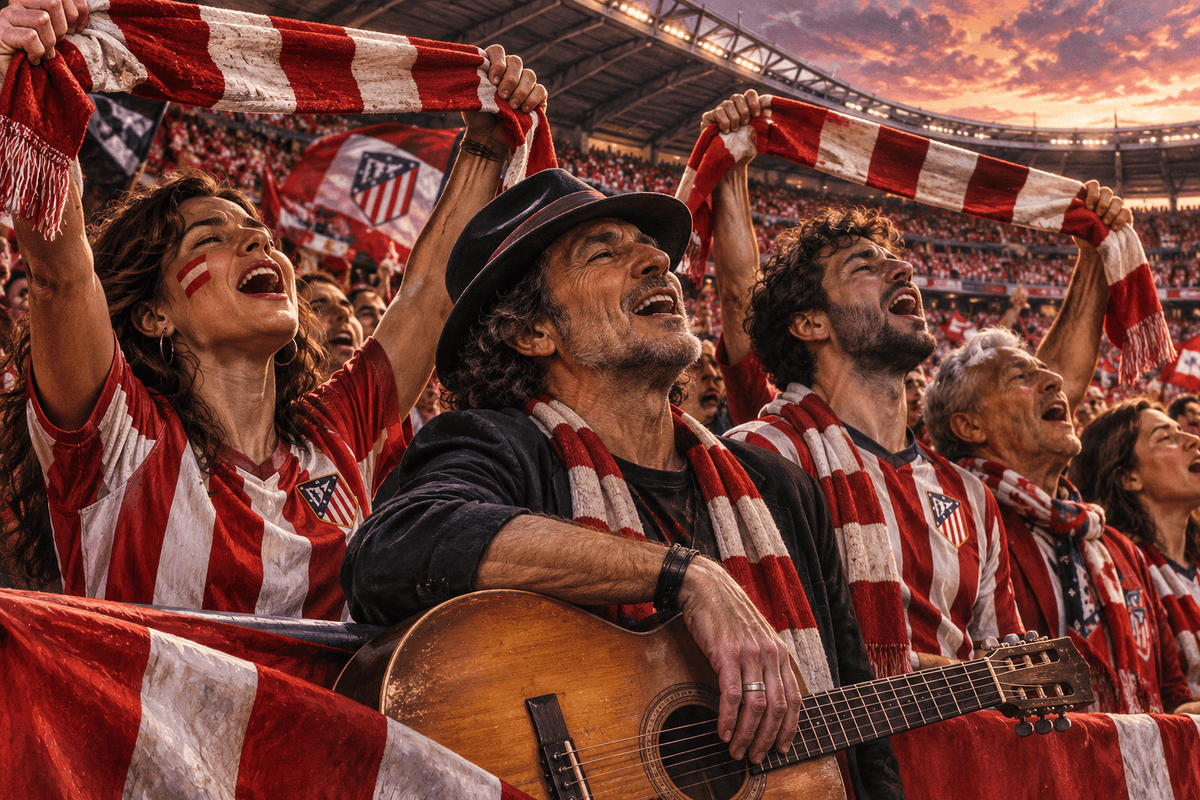
At an Atlético match, you can often tell what kind of song you are hearing before you understand the words. A familiar melody played through the speakers can bring people in different sections in at once. A chant started by a group in the stands has to travel, sometimes one section at a time. The official anthem, the centenary song and the chants passed from fan to fan all have their place in that sound.
The official anthem in the stadium
The familiar official anthem has the feel of a club song written to be learned by a whole ground. The recording associated with singer José de Aguilar belongs to the earlier musical history of Atlético. Its melody and refrain make it easy for people to join after only a few bars. That quality matters when the sound is travelling around a stadium. Some people have been singing it for decades and some have only heard it on recordings. The structure gives the two groups enough common ground to sound like one crowd by the time the familiar refrain comes around again.
Why a songwriter took a different route
The centenary was an occasion for looking at the club through its supporters' lives. Sabina's song works on the scale of one voice, even when thousands of people sing it. There is space for irony and for a supporter explaining a loyalty that is difficult to account for by results alone. The directness helps the song travel away from the stadium. You can listen to it at home and still recognize a person speaking from inside the club's world. For someone hearing both songs on the same day, the official anthem gives a public introduction to Atlético while the centenary song sounds closer to a conversation with someone who has been following it for years.
Sabina’s song for the centenary
For the club’s hundredth anniversary in 2003, Joaquín Sabina wrote Motivos de un sentimiento. The centenary commission gave him room to write about the experience of belonging to Atlético. Its first-person voice makes it feel like an account from someone in the crowd. It finds room for the years when following Atleti demanded a particular sense of humour, as well as the pleasure of sharing a win. That helps explain why the song has outlived the anniversary it was written for.
How a chant finds its moment
A chant during open play has to fit a situation that may change quickly. A short call can follow a tackle or a goalkeeper's save and end when the next attack starts. A repeated melody can go on during slower stretches, when the crowd has time to carry it across more than one section. The pitch changes what works. If a winger suddenly runs clear, a song can stop halfway through as people stand up. On a quiet afternoon it may take several attempts before a chant moves away from the section that started it. Watching for that exchange is one way to follow the match through the crowd as well as through the ball.
From the Calderón to the Metropolitano
A recording can move from one ground to another in a day. A singing crowd has to get used to different entrances, roof shapes, distances and neighbours. People who used to gather at the Calderón have formed new routines around the Metropolitano. An anthem that they already know makes the connection audible. The surroundings sound different, but there is still a moment when a group on the way to its seats hears the melody and starts to sing along. A supporter who only knows the newer ground can find older footage and listen for that same point of entry, even if the camera is looking at a very different stadium.
The crowd has more than one tempo
A crowd following a tense lead can produce short, loud bursts and long gaps. When the result is more comfortable, the same people may hold a melody for several repetitions. Listen for that change if you watch two recordings from the same stand. The stadium and much of the crowd can be identical, yet an attack or a stoppage moves the sound in another direction. There are also quieter corners of the ground where people join in late or spend the match talking through the game. Stadium audio captures fragments of those differences. For a first-time supporter, it explains why learning the melody helps and why an unfamiliar chant will still feel different from one visit to the next.
A listening guide for a first visit
Listen to the official recording and the centenary song separately before going. Pay attention to the pace and the opening melody so you can recognize which one starts. Arrive early enough to hear the public-address system and the stands before kick-off. During the game, wait for a chant to come round a second time before trying to join. Short chants often make sense through the action even if you are still learning Spanish. After the whistle, listen to which songs survive the result. The final score provides one reason for the mood and the crowd's choice of song provides another.
What to listen for on matchday
Hear the two recorded songs before your first visit and you will have an easier time picking out the melodies in a full stadium. Then put the phone away and listen for the shorter chants that rise during play. A name might follow a substitution or a save. A call from one section might come back from another. You can join the next repetition once you catch the rhythm. That is how a song goes from being something you heard before the match to part of the match you remember.
Sources and further reading · AS · Joaquín Sabina





Comments
No comments yet. Be the first to say what you think.