Atlético Madrid’s Uruguayan Connection: From Forlán to Giménez
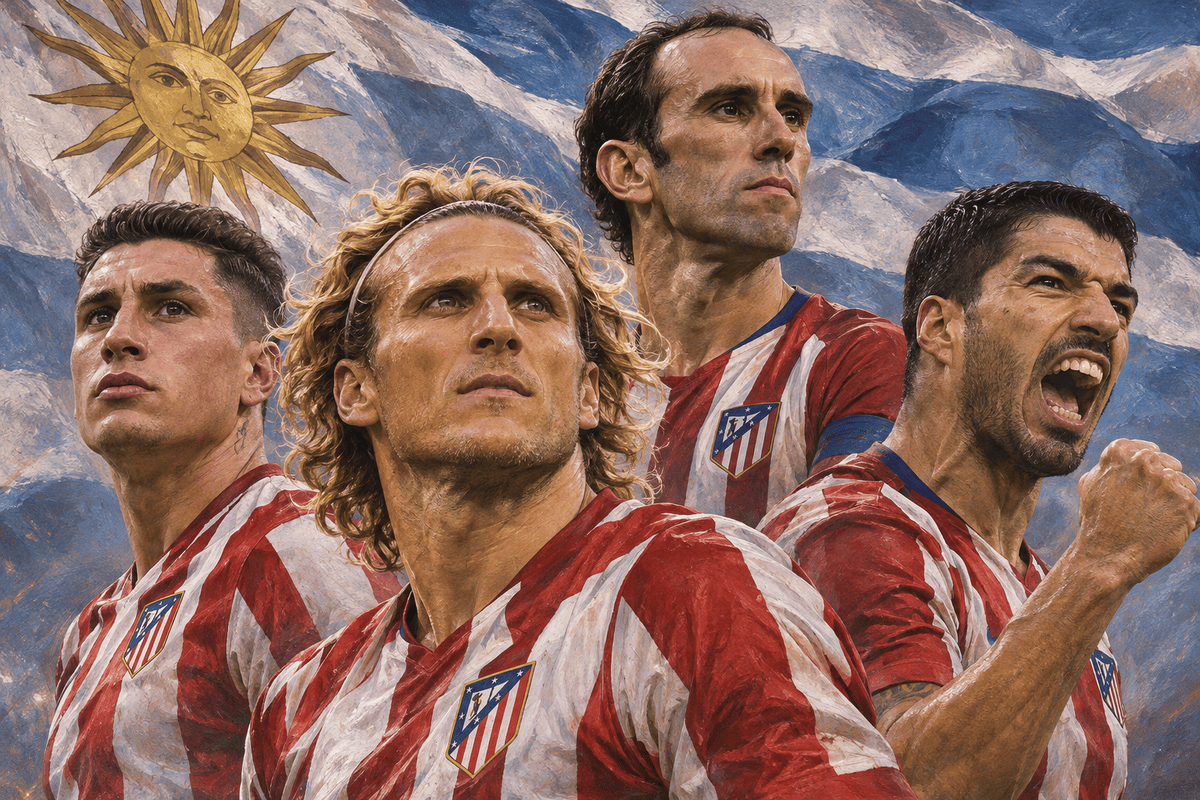
In Hamburg in 2010, Diego Forlán scored both goals as Atlético beat Fulham 2–1 in the Europa League final. In Valladolid in 2021, Luis Suárez struck the winner in another 2–1 that made Atlético league champions. The scores look alike on a page. The teams around those two Uruguay forwards had different ways of playing and entered their decisive matches with different expectations. That distance is what makes Atlético’s Uruguayan connection worth exploring.
Forlán and the first Europa League final
The final in Hamburg was part of a campaign whose knockout rounds demanded patience. By the last match, Atlético faced a Fulham side whose own run had made it a credible threat. Forlán opened the scoring and Simon Davies equalized. The game went well into extra time before Sergio Agüero worked the ball across for Forlán to finish again. Watch the second goal for what the striker does before the final touch. He makes himself available close to goal while the ball carrier is still working down the side. A run that takes only a few strides makes a difference after almost two hours of football.
Godín between two famous headers
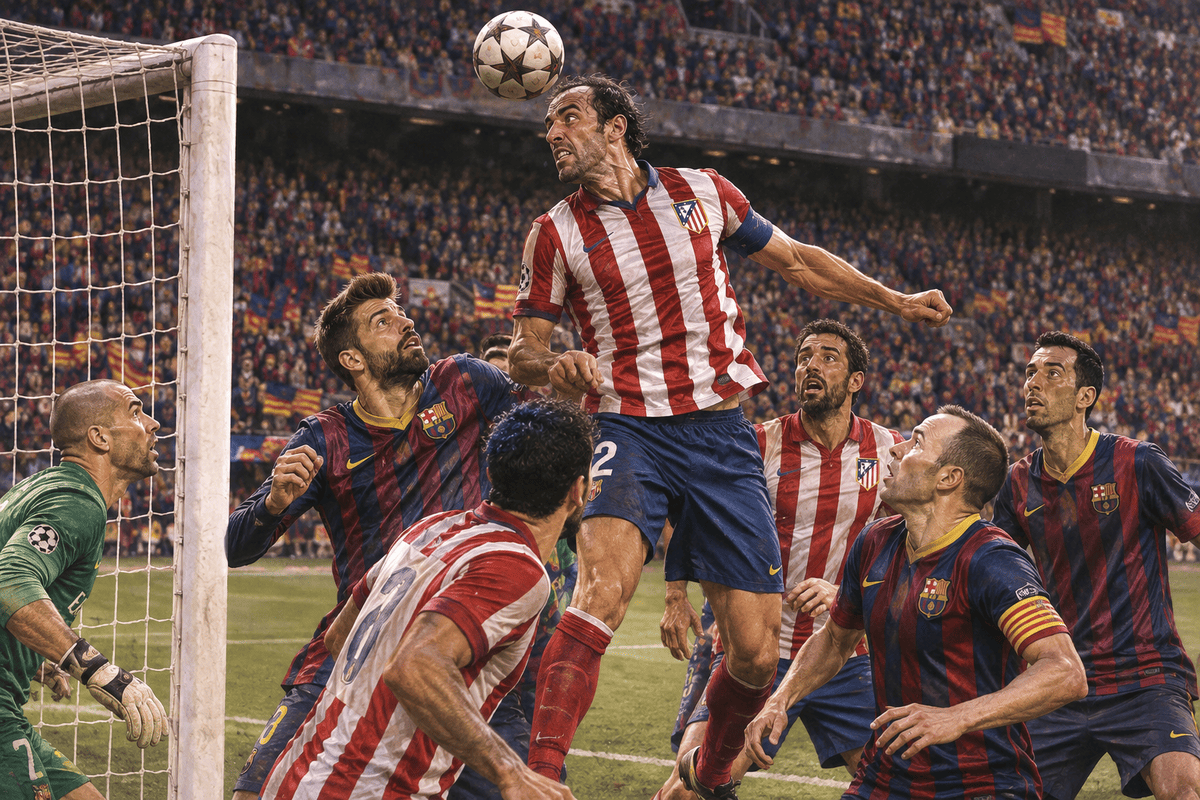
Godín's headers at Camp Nou and in Lisbon arrived in consecutive weeks in May 2014. One restored a draw that delivered the league title. The other put Atlético ahead in a Champions League final it eventually lost. That pair of images is an unusually compact introduction to a defender's attacking importance. His regular work also took place at the opposite end. Atlético often defended with small distances between lines, which meant a centre-back could be asked to attack one ball quickly and hold back on the next. The discipline required to read that change is the connection between many otherwise unremarkable minutes in his Atlético career.
From the forwards to the centre-backs
Forlán’s performance in Hamburg stands alongside the prospect that every loose ball near the area might become a shot. Godín gave supporters a different memory four years later. A defender, he scored a header at Camp Nou to seal the league and helped Atlético see out the draw. José María Giménez arrived while Godín was already established. Their overlap gave Atlético two centre-backs who also played together for Uruguay. Watch them on a cross and you can see the relationship at work: who attacks the first ball and who is available if it travels beyond him.
What the pairing gave Giménez
Giménez joined Atlético in 2013 and had an established international teammate ahead of him in the dressing room. Sharing a club and a national team creates a useful opportunity for a developing central defender. The same movements can be tested in competitions played at different speeds and with different players around the pair. Think about a striker dropping off towards midfield. One defender has to decide whether to go with him while the other checks the space behind. On a high ball into the area, the decision can reverse. Those are small conversations between players, carried out through steps, glances and a call that a viewer at home may never hear.
The different job Suárez took on
The 2020–21 title race asked Atlético to manage a long run in front and handle the closing pressure from its rivals. Suárez was the reference point up front in a team able to change its shape and the speed of its attacks. On the last day, Valladolid scored first and Ángel Correa levelled before Suárez took the opportunity for the winner. The move produced a familiar scene from his career: a defender's or midfielder's error abruptly becomes a one-on-one, with very little time left for anyone else to intervene. The quality is in the anticipation as much as in the final strike.
Why the opponents belong in the story
Fulham, Barcelona and Valladolid each made Atlético solve a different problem. Fulham recovered from going behind in a final and forced the match deep into extra time. Barcelona already had a lead and needed to hold on to it to take the title. Valladolid were playing for their own position on the final day and scored first. Seen in that order, the Uruguayan highlights explain something about the games as well as the goals. Forlán needed one more opening in a contest that had almost run out of time. Godín restored the scoreline his team needed. Suárez seized a chance after Correa had brought Atlético back into the match. The opponent and the score before the goal give every finish a different value.
How to trace the thread between eras
Start with the 2010 final, then watch a sequence featuring both centre-backs in a later season, and end with the 2021 title decider. Notice how often your eye moves from where the ball is to where the player thinks it will be. This is particularly clear with central defenders covering each other and with a forward watching for a careless pass. Those are the moments that connect this set of players across different lineups, positions and seasons.
Four careers and a useful contrast of roles
Forlán and Suárez offer two examples of a forward deciding a season in the area. Godín and Giménez show the other side of Atlético's relationship with Uruguay, with anticipation, covering and aerial duels carrying much of their week-to-week value. The trophy footage is a good way into the story. For a fuller picture, pick a longer spell of play in each era. Notice who the forwards combine with before a chance and what the centre-backs do when the crowd has little reason to look at them. That is where the four contributions start to look like four different careers.
Suárez and a different title race
Suárez came into a side that could spend longer spells building attacks than the 2014 champions. Against Valladolid he showed the value of acting quickly when a chance arrives without warning. He picked up a loose pass and finished to put Atlético ahead. You can build a short viewing guide from those moments: Forlán in Hamburg, Godín at Camp Nou, the two centre-backs working together, then Suárez in Valladolid. Each clip gives a different answer to what Atlético needed from its Uruguayan players.
Sources and further reading · UEFA · Hamburg 2010 · Atlético de Madrid · Valladolid 2021

Comments
No comments yet. Be the first to say what you think.