
Vicente Calderón: Memories of Atlético Madrid's Sacred Home
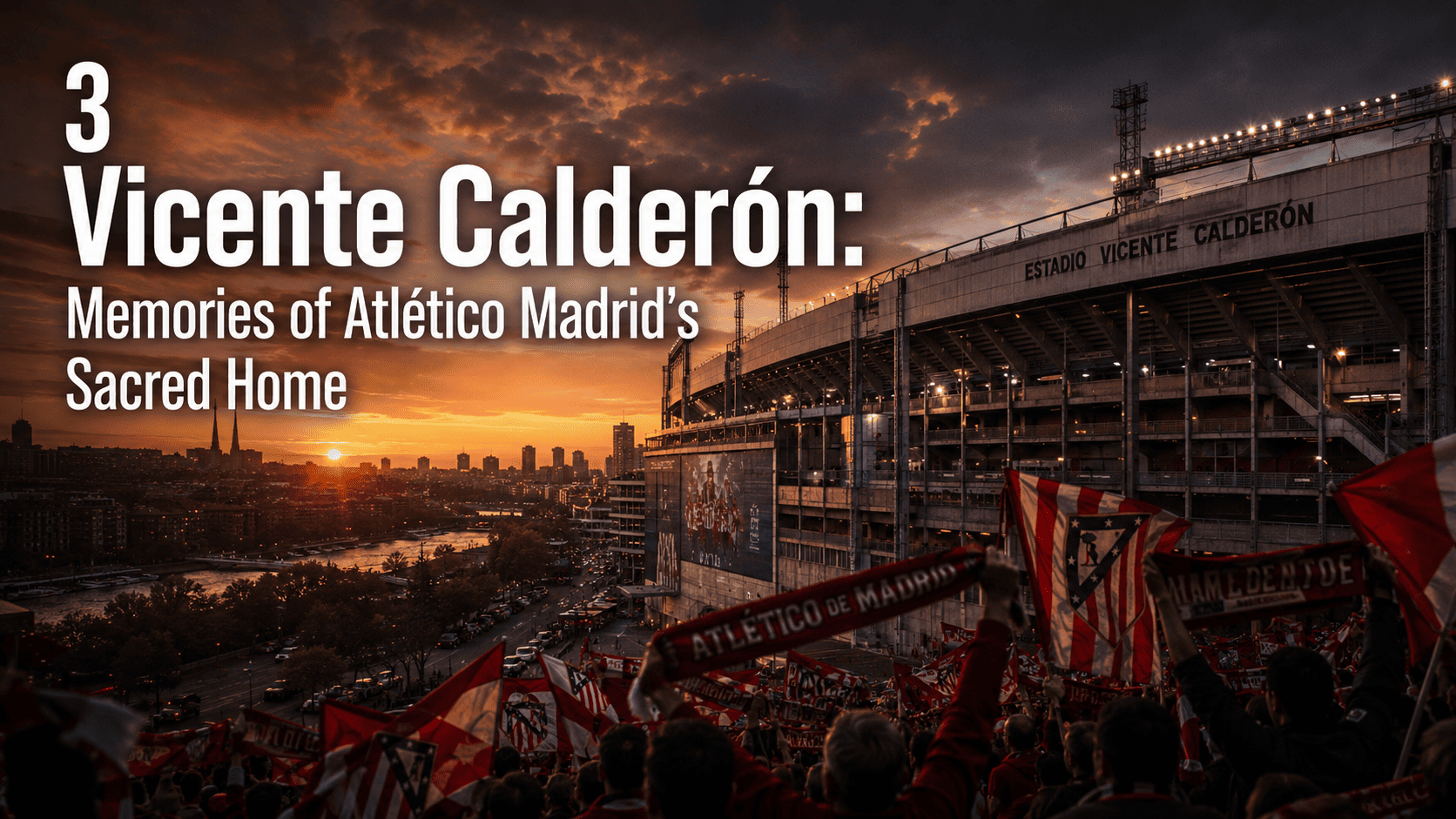
For more than five decades, the Estadio Vicente Calderón was the beating heart of Atlético Madrid. Located on the banks of the Manzanares River in the south of Madrid, it was more than a stadium — it was a temple, a fortress, and a second home for hundreds of thousands of rojiblanco fans. This is the story of a ground that will never be forgotten.
Building a Dream (1966)
The stadium opened in 1966 under the name Estadio del Manzanares, named after the river that flowed beside it. Built under the leadership of club president Vicente Calderón — after whom it was renamed in 1971 — the ground originally held 62,000 spectators and was one of the largest and most impressive venues in Spain. Its construction was a statement of Atlético's ambition and its president's belief in the club's future.
The Atmosphere: Like No Other in Spain
What made the Calderón truly special was its atmosphere. The steep stands brought fans close to the pitch, creating an intensity that visiting teams dreaded. The south end — home to the most passionate Atlético ultras — was capable of generating a wall of noise that made the ground shake. Players and managers across Europe have spoken about the Calderón's atmosphere as among the most electric they ever experienced.
Iconic Nights Under the Calderón Lights
The Vicente Calderón witnessed some of Atlético's greatest moments. The La Liga title celebrations of 1977 and 1996. Radamel Falcao's thunderous hat-tricks in European nights. Jan Oblak's extraordinary saves in Champions League knockout rounds. Diego Simeone's extraordinary side defeating Chelsea 3-1 on aggregate to reach the 2014 Champions League final. Each of these memories was created within those historic walls.
Home to More Than Football
The Calderón also hosted events beyond football. The Rolling Stones performed there in 1981, and Bruce Springsteen played to a crowd of 70,000 in 1988 — both concerts becoming legendary events in Madrid's cultural history. The stadium also hosted 14 Copa del Rey finals throughout its existence, making it one of Spanish football's most important venues.
The Final Match and a Tearful Farewell
The last competitive match at the Vicente Calderón took place on May 21, 2017. The official farewell ceremony on May 28 — a match between an Atlético legends side and a World XI — became an emotional occasion that brought tears to thousands of eyes. Players past and present gathered to say goodbye to a stadium that had given so much to so many.
What Remains
The Calderón was demolished in 2020 to make way for a public park alongside the Manzanares. Yet the memories live on. A carved stone ball marks the exact spot where the centre circle once stood. A time capsule buried beneath the ground contains memorabilia for future generations to discover. And in the hearts of every rojiblanco who ever roared inside those walls, the Vicente Calderón will stand forever.
Conclusion
The Vicente Calderón was more than bricks and mortar — it was the soul of Atlético Madrid for 51 years. Its memory lives on in every fan who experienced its unique magic. Learn more about this and other chapters of Atlético's history in our dedicated book.
Explore Our Book
More from the blog






2026
Comments