
Why Atlético Madrid Wear Red and White Stripes: Crest and Kit History
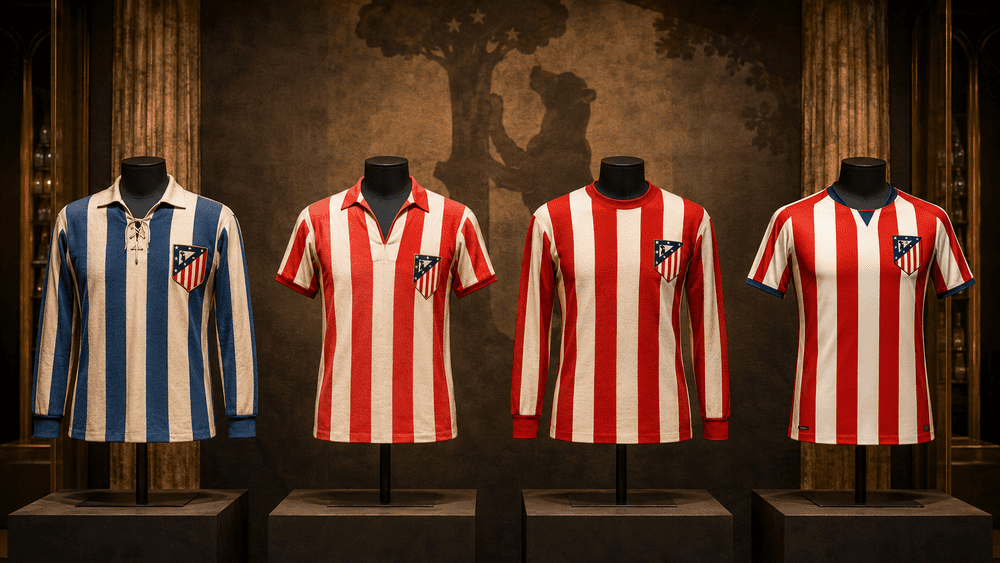
The red and white stripes of Atlético Madrid are among the most recognisable in world football. But the club did not always wear them, and the story of how they arrived, along with the evolution of the famous crest, reveals a great deal about Atlético's origins and identity.
Founded in Blue and White
When Atlético Madrid was founded in 1903 by Basque students living in the capital, it was created as a sister club to Athletic Club Bilbao. Naturally, it adopted Bilbao's colours: blue and white. For the first eight years of its existence, the club that the world now knows as Los Rojiblancos played in a strip that looked nothing like the one it wears today.
The Switch to Red and White in 1911
In 1911 both Athletic Bilbao and Atlético Madrid changed to red and white stripes. The most widely repeated explanation is a practical one: the striped cloth was cheap and readily available in England, where it was also used to make mattress covers. Club representatives buying kit in England found the red and white material far more economical than the blue and white alternative.
Why They Are Called Colchoneros
That same mattress cloth gave Atlético their most famous nickname. Old Spanish mattresses were covered in red and white striped fabric, so supporters and rivals alike began calling the team Los Colchoneros, the mattress makers. What began as a joke became a badge of honour. Our article on Atlético's nicknames explores this and the club's other names in depth.
The Crest: A Bear, a Tree and Seven Stars
The Atlético crest draws directly from the coat of arms of the city of Madrid. The bear reaching for the madroño, or strawberry tree, is the symbol of the capital and appears on the Puerta del Sol. The seven stars represent the constellation of Ursa Major. Together they announce something fundamental: this is a club of Madrid, of the city itself.
How the Crest Has Changed
The badge has been redesigned several times across the club's history, most notably in 2017 when a simplified, modernised version was introduced alongside the move to the new stadium. The redesign was controversial among supporters who felt the traditional crest carried too much history to alter. In 2024 the club responded to that sentiment by restoring a version much closer to the classic design.
The Blue Shorts
Atlético's home shorts are traditionally blue rather than red, white or black. This is another link back to the club's Basque origins and its founding relationship with Athletic Bilbao, and it remains one of the small details that distinguishes Atlético from other striped teams across Europe.
An Identity Worn on the Chest
For Atlético supporters, the stripes are not simply a design. They represent a working-class club from the south of Madrid that has spent more than a century refusing to accept second place, a story told across our history of the club's seven key moments.
Conclusion
The red and white stripes were born from practicality but became a symbol of identity, pride and belonging. Learn more about how Atlético Madrid became the club it is today in our dedicated book.
Explore Our Book
More from the blog





2026
Comments