
How Atlético Madrid Overpowered Real Madrid: Why the 2–1 Scoreline Does Not Tell the Full Story
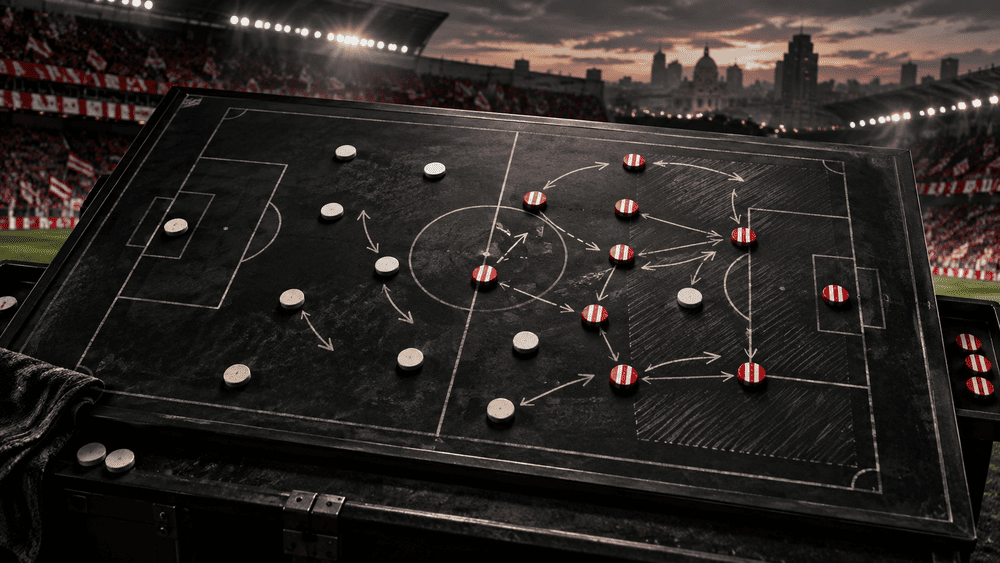
The score says Atlético Madrid 2–1 Real Madrid.
The match said considerably more.
It said Atlético were stronger.
More aggressive.
More coherent after the break.
And far more capable of turning the emotion of the derby into useful football.
Real Madrid finished with ten men.
That matters.
It changed the scale of the advantage and gave Atlético the space to attack with greater freedom.
But it does not explain everything.
It does not explain why Real had already created so little.
It does not explain why Atlético kept finding the same route down Madrid's left side.
It does not explain why Thibaut Courtois had to make five saves, why Madrid needed desperate clearances near their own goal, or why the underlying numbers were so one-sided.
Atlético produced 1.46 non-penalty expected goals to Real Madrid's 0.38.
Add the penalty and the performance becomes even more convincing than the final score.
Atlético did not win this derby only because Real Madrid went down to ten men. They won because they understood where the game could be broken — and attacked that point until it collapsed.
First, Atlético Refused to Give Real the Match They Wanted
The first half was not beautiful.
It was tense.
Physical.
Fragmented.
And full of confrontations that repeatedly interrupted the rhythm.
That suited Atlético more than it suited Real Madrid.
José Mourinho's side appeared prepared to wait deeper and attack the space behind Atlético through Kylian Mbappé and Vinícius Júnior.
Simeone understood the danger.
Atlético kept possession, but they did not attack with unnecessary recklessness.
They circulated.
Probed.
And protected themselves against the counterattack.
Real's first shot did not arrive until the 20th minute.
Their first effort on target came in the 39th, when Jan Oblak pushed away Arda Güler's long-range attempt.
Mbappé and Vinícius had moments in transition, but Atlético's defensive line did not allow those moments to become a sustained threat.
Marc Pubill made important early interventions.
Cristian Romero defended forward.
Dávid Hancko remained calm in possession.
Johnny Cardoso screened the central spaces Real needed to connect midfield with attack.
The opening 45 minutes were not Atlético at their most fluid. They were Atlético making sure Real Madrid could never become comfortable enough to play at their most dangerous.
Then Koke Gave the Chaos a Structure
Atlético's first-half shape was difficult to read.
Sometimes even for their own players.
Giuliano Simeone, Marcos Llorente and Pubill all appeared in the right-back zone at different moments.
Kang-in Lee and Álex Baena drifted towards the same side.
The ideas were visible.
The spacing was not always clean.
Simeone changed that at halftime.
Koke replaced the booked Pubill.
Llorente moved clearly to right-back.
Atlético settled into a recognisable 4-3-3.
And suddenly the same aggressive movements had a stable platform beneath them.
Cardoso could hold his position.
Koke could move higher, support the ball and lead the press.
Llorente could advance from a defined starting point rather than constantly exchanging roles.
The effect was immediate.
Baena forced Courtois into a save.
Grimaldo soon tested him again.
Atlético were no longer merely competing in the derby.
They were beginning to control it.
Koke did not win the match with one spectacular action. He won influence by giving every Atlético player a clearer picture of where the next pass, press and supporting run should come from.
Dávid Hancko Found the Pass That Changed Everything
The decisive sequence began far away from goal.
With Hancko.
Atlético's centre-back completed 18 progressive passes, more than any other player in the match.
That number matters because it explains how Atlético escaped Real's pressure without simply clearing the ball.
Hancko could advance the game.
Sometimes through a short pass into midfield.
Sometimes through a diagonal towards the flank.
And, in the 51st minute, directly into the space behind Madrid's defence.
Giuliano recognised the moment immediately.
He accelerated inside from the right.
Dean Huijsen reacted late.
The defender pulled him down inside the penalty area with no realistic attempt to play the ball.
Penalty.
Red card.
Grimaldo sent Courtois the wrong way two minutes later.
The temptation is to describe Huijsen's decision as an isolated mistake.
It was a mistake.
But Atlético created the conditions for it.
Hancko saw the run.
Giuliano made it with conviction.
Madrid's defensive line was forced to turn.
And a match that had been tense but balanced suddenly belonged to Atlético.
The red card was not a random gift. It was the punishment for Atlético identifying a vulnerable defensive line and attacking the space behind it with perfect timing.
The Right Side Became Madrid's Breaking Point
Atlético had leaned towards their right side before halftime.
After the break, that preference became domination.
Lee moved into the half-space.
Giuliano held width before attacking inside.
Llorente supported from behind.
Koke offered the safe pass that allowed the combination to restart when the direct route was closed.
Real Madrid's left side could not solve the overload.
Marc Cucurella finished with 14 defensive actions, the most of any player on the pitch.
That sounds impressive.
It also reveals how often Atlético forced him to defend.
Vinícius offered too little protection ahead of him.
Madrid's midfield did not slide across quickly enough.
Cucurella was repeatedly asked to manage more than one problem.
The second goal was the complete expression of that advantage.
Lee received and released the ball towards Giuliano.
Giuliano attacked the outside channel and drove a low cross behind the defensive line.
Jonathan David arrived in the six-yard box and finished first time.
Three players.
Three different movements.
One defensive problem Madrid never managed to solve.
Atlético's second goal looked simple because the difficult work had already been done: Lee attracted pressure, Giuliano attacked the exposed channel and David occupied the exact space a number nine must attack.
Giuliano Simeone Was the Player Real Could Not Control
Some players dominate a derby through the number of touches they take.
Giuliano dominated this one through what his movement forced other players to do.
Run with him.
Drop deeper.
Defend wider.
Turn towards your own goal.
Make decisions at full speed.
Huijsen made the wrong one.
Cucurella spent much of the afternoon reacting to him.
And when Atlético needed the goal that made their superiority visible, Giuliano supplied the assist.
His performance was not only offensive.
In the final moments, with Real desperately looking for an equaliser, he recovered to dispossess Mbappé and remove one last possible danger.
That is why his display felt so complete.
He created the penalty.
Created the second goal.
Helped defend the lead.
And played the derby at the emotional intensity Atlético needed without allowing that emotion to replace tactical discipline.
Giuliano was not simply Atlético's most energetic player. He was the tactical trigger that turned Hancko's passing, Lee's creativity and David's penalty-box movement into decisive actions.
Lee Kang-in Gave Atlético the Creative Advantage
Lee did not begin the game in his ideal role.
At times he operated almost as a second striker.
He could influence the match there, but he could not control it.
The halftime reorganisation changed his possibilities.
With Koke helping Atlético circulate the ball and Llorente providing a clearer position on the outside, Lee could receive in the right half-space.
That is where he became dangerous.
He could turn towards goal.
Combine with Giuliano.
Or force Cucurella to step inside and open the wing.
Lee generated 0.369 expected threat from open-play passes, the highest figure in the match.
Atlético also supplied nine of the top ten players for expected threat created through open-play passing.
That is an extraordinary collective imbalance in a derby between two elite teams.
It shows that Atlético were not only running harder.
They were moving the ball into more damaging areas.
Lee's contribution to the winning goal was technically a pre-assist. Tactically, it was the moment that captured Atlético's superiority in creation.
Jonathan David Gave the Attack a Real Penalty-Box Reference
David could have scored inside the opening minute.
He missed from close range.
A striker can disappear after that.
He did not.
He continued occupying the centre-backs.
Continued arriving between defenders.
Continued trusting that the next ball would come.
When Giuliano crossed in the 59th minute, David did not wait at the far post.
He attacked the six-yard box.
He moved in front of the recovering defender.
And he finished before Courtois could reset his feet.
It was his third goal in his first three Atlético appearances.
More importantly, it was the kind of goal this attack needs.
No extra touch.
No unnecessary complication.
Just recognition of the decisive space and absolute commitment to reaching it.
David did not need to dominate the ball to dominate the decisive moment. Atlético created the corridor; their number nine attacked it exactly as a number nine should.
Real Madrid Lost the Midfield Before They Lost a Defender
The dismissal offers Real Madrid an easy explanation.
It should not become an excuse.
Federico Valverde and Aurélien Tchouaméni never established control of the centre.
Arda Güler lost possession too frequently.
Jude Bellingham competed, recovered the ball and created chances, but too often had no reliable connection to the forwards.
Real's most dangerous attackers became isolated individuals.
Mbappé carried the ball forward.
Vinícius found occasional shooting positions.
But the visitors rarely produced the collective movements that turn individual speed into a functioning attack.
That problem became more severe with ten men.
Mourinho removed Güler and Vinícius to introduce Antonio Rüdiger and Yan Diomande.
The shape changed.
The control did not return.
For long periods after Atlético's second goal, Real appeared more concerned with avoiding a heavier defeat than finding a route back into the match.
They did not touch the ball inside Oblak's penalty area until their late goal.
Real Madrid's greatest problem was not that they had one fewer player. It was that even with eleven, they never built a midfield capable of controlling where the derby was being played.
The Numbers Show Why 2–1 Flattered Real Madrid
Atlético should have made the final minutes irrelevant.
Courtois stopped Romero from close range.
Konaté cleared Julián Álvarez's follow-up off the line.
Álvarez missed another major opportunity in stoppage time.
Atlético produced 1.46 non-penalty expected goals.
Real produced only 0.38.
Courtois made five saves.
Madrid's defenders were forced into emergency interventions near their own line.
Even set pieces, normally a route back into a difficult game, showed the difference.
Atlético generated four shots from four attacking restarts.
Real generated three shots from ten.
Rüdiger's 89th-minute header created a nervous ending.
It did not rewrite the previous 88 minutes.
The goal made the scoreline competitive.
The performance was not.
Real Madrid lost by one goal because Courtois and last-ditch defending kept them alive. The balance of chances says Atlético's victory deserved to look far more comfortable.
But Atlético Also Showed One Remaining Weakness
A convincing performance can still contain a warning.
Atlético did not kill the match.
They had the chances.
They had the extra player.
They had Real Madrid trapped deep and struggling to create.
Yet the third goal never came.
Then Romero left the pitch.
Robin Le Normand entered.
Rüdiger beat him in the air from Bernardo Silva's free kick.
Suddenly a game Atlético had dominated required one final act of resistance.
They survived it.
Giuliano's recovery against Mbappé captured the commitment that remained.
But against a stronger Real performance, or in a Champions League knockout match, failing to convert dominance into a decisive scoreline could be punished.
Atlético proved they can overpower an elite opponent. The next step is learning to turn that superiority into a result that does not require suffering in the final minutes.
This Was a Victory for Simeone's New Atlético
There was plenty of traditional Atlético in this performance.
The aggression.
The emotional energy.
The willingness to defend every duel as though the season depended on it.
But this was not simply the old Atlético defending deep and waiting for one counterattack.
They had more of the ball in the cautious first half.
They reorganised into a clearer attacking structure after the break.
They progressed possession through Hancko.
Created through Lee.
Overloaded through Koke and Llorente.
Broke the line through Giuliano.
And finished through David.
Every decisive attacking action connected one part of the team to another.
That is what made the performance so encouraging.
Atlético did not depend on one superstar producing a miracle.
They built a collective advantage and then allowed individual quality to finish the work.
This was Simeone football, but not a museum version of it. The aggression remained; around it, Atlético added progressive passing, positional flexibility and a front line capable of converting structure into chances.
Final Thought: The Score Was Close — The Performance Was Not
Real Madrid will talk about the referee.
About Romero's challenge on Bellingham.
About Lee's contact with Valverde.
About the decision that sent Huijsen off.
Those incidents belong in the story of the derby.
They should not become the entire story.
Because the football itself delivered a clear verdict.
Atlético restricted Real before the dismissal.
Improved immediately after Koke entered.
Found a repeatable advantage on the right.
Turned Hancko's range into Giuliano's running.
Turned Lee's intelligence into David's finish.
And forced Real Madrid's best performer to be their goalkeeper.
The late goal created drama.
It did not create doubt about which team had played better.
Atlético Madrid beat Real Madrid 2–1. But the deeper truth of the derby is that Simeone's team discovered a structure, a flank and an intensity their rivals could not match — and the only surprising thing was that the scoreboard remained close enough to suggest otherwise.
More analysis



2026
Comments